
Kildare Route Project Gabion Retaining Walls & Soil Nailing for Rail Infrastructure Upgrade
Challenge
The Kildare Route Project forms a key part of Ireland’s National Development Plan, which prioritises investment in public transport infrastructure to improve rail service quality, increase speed and reliability, and ultimately reduce dependence on private car travel. This major rail upgrade project focuses on enhancing connectivity across Kildare, Carlow, and Laois through the development of new commuter stations and the modernisation of existing ones.
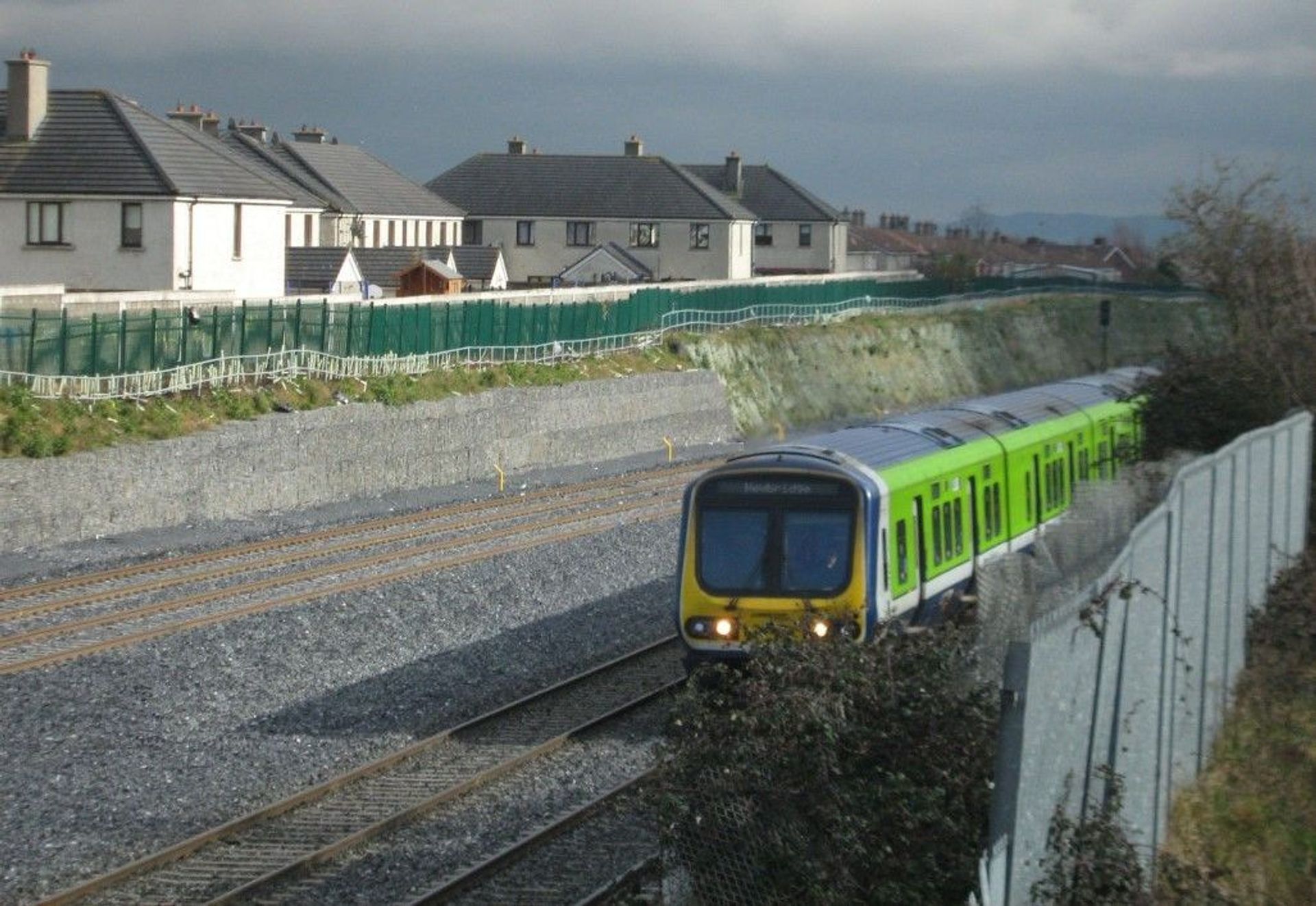
A critical engineering challenge within the project was the need for effective and adaptable retaining structures along the expanded railway corridor. The project required widening the rail line from two tracks to four tracks in areas south of Dublin city centre, creating significant spatial constraints. The design of retaining systems had to accommodate limited working space, varying ground conditions, and different types of retained material along the alignment.
The original design specified multiple retaining wall solutions, including concrete crib walls, sheet piling, and king-pile retaining systems. However, these solutions needed to be reassessed to ensure cost efficiency, constructability, and performance within the tight programme constraints of a major rail infrastructure project.
Solution
Byrne Looby and Partners, working on behalf of main contractor Siac Ltd, were appointed to deliver value engineering for the retaining structures along the Kildare Route. Their objective was to identify more efficient, cost-effective, and constructible alternatives to the originally specified systems while maintaining high engineering standards.
Maccaferri was engaged to provide specialist expertise in retaining wall design and ground engineering solutions. Following a detailed assessment, Maccaferri proposed the use of gabion retaining walls as an alternative to concrete crib structures. Gabions were selected due to their cost-effectiveness, durability, and comparable installation time, making them an ideal solution for infrastructure projects requiring both speed and reliability.
Gabion walls were predominantly installed in constrained areas and pinch points, particularly where made ground required retention. In sections where ground conditions were suitable, a soil nailing solution was developed to stabilise steep slopes of approximately 60 degrees. This method provided a flexible and efficient slope stabilisation technique, reducing the need for more intrusive structural systems.
To enhance both performance and environmental integration, MacMat® R was specified as the facing system for the soil-nailed slopes. Combined with high-quality topsoil and hydroseeding, this solution enabled rapid vegetation establishment. The close contact between the erosion control mat and the soil ensured optimal conditions for plant growth.
As vegetation developed, the MacMat® R reinforced the root structure, improving soil stability and long-term erosion resistance. This approach delivered a sustainable, green retaining solution that not only met structural requirements but also enhanced the visual and environmental quality of the railway corridor.
This combination of gabion retaining walls, soil nailing, and erosion control solutions demonstrates an effective approach to modern rail infrastructure challenges, delivering cost savings, construction efficiency, and long-term performance.
Get in touch with us
[contactForm_txtSuccessSubmit]